Opinion Piece: Get your data in order and set a course for greener shipping.
Opinion piece CEO, René Bredmose Christensen:
There is cause for optimism in the shipping sector, and we are seeing more initiatives aimed at making shipping greener. Shipowners are now far more willing to reduce emissions from ships than they were just a few years ago. That said, we must also acknowledge that the shipping industry has a data problem, which means shipowners are not getting the insights needed to accelerate the green transition.
In the coming weeks alone, there are two events worth keeping an eye on. From 23 to 27 November, the IMO’s working group known as ISWG-GHG 23 will continue its discussions on a global Net-Zero Framework – that is, proposals for common, global climate rules designed to steer the shipping industry towards net-zero emissions by 2050. A few days later, from 30 November to 3 December, the IMO’s Marine Environment Protection Committee (MEPC) will convene for MEPC 85, with emissions, energy efficiency and environmental protection, amongst other topics, on the agenda.
There remains disagreement over the way forward, but the work being done within the IMO, amongst others, demonstrates a willingness to find common solutions. I sense the same willingness when I speak to shipping companies and other industry stakeholders. Compared with just three years ago, there is far greater interest in concrete climate action.
However, although progress is being made, the shipping industry still has a data problem. We still know too little about the emissions of individual ships and how they can reduce their fuel consumption. Far too many people still rely on calculations that are, at best, uncertain and, at worst, misleading.
Shipowners cannot navigate between new requirements and regulations blindfolded. They need valid data to set the right course. Calculations and standard values do not reveal how engines perform during operation or how high emissions really are.
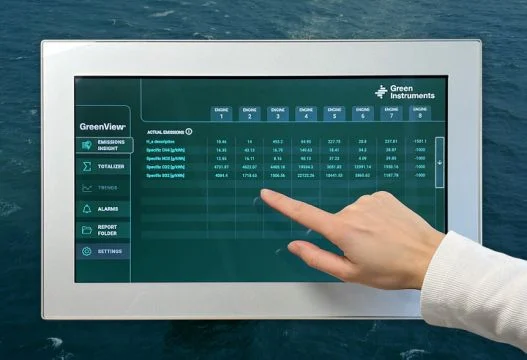
In the coming years, shipping companies will have to deal with the use of multiple fuels, technologies and types of emissions. How do they assess emissions from different fuels whilst at sea? How do they demonstrate that an investment reduces emissions? And how do they determine the engine settings that deliver the lowest fuel consumption? Here, real-time measurements are a crucial tool – for documentation, compliance with requirements and day-to-day decision-making.
The new five-year partnership between the Global Centre for Maritime Decarbonization (GCMD) and Equinor is a strong example of how the green transition requires joint efforts and practical trials. They will collaborate on areas including alternative fuels, energy efficiency and CO₂ management. Their emphasis on documentation and verification is entirely appropriate.
After all, shipowners and organizations can only derive the full benefit from such initiatives if they have access to valid data. I therefore hope that they will involve experts in emissions measurement to a greater extent at an early stage of the process. This increases the likelihood that we can actually learn from each other’s experiences.
At the same time, shipowners can take advantage of some straightforward opportunities. Linking real-time measurements to the engines’ operational data would enable shipping companies to identify which operating conditions increase fuel consumption and emissions. However, without the necessary equipment on board, these opportunities are easily overlooked. With valid data, shipping companies can act immediately to reduce costs and cut emissions.
I hope that the IMO meetings will bring the shipping industry closer to achieving common climate regulations. However, these regulations cannot stand alone. The green course must be set collectively and guided by what we can measure and document.