14/03/2024

Focusing on green fuels takes the focus off shipping’s major problems

Shipyard order books show that more and more ships are being built that can run on methanol or liquified natural gas (LNG). Major shipping companies are investing in green fuels for their fleets, and researchers around the world are working intensely to find new solutions that can make the shipping industry greener.

This is all good news that strengthens the belief that shipping is reducing its emissions of greenhouse gases, among others. While there is reason for some optimism, as shipping is becoming more sustainable, there is no doubt that we are still very far from the goal. We see a tendency to give a lot of attention to individual green initiatives, while in our opinion there is not enough focus on the fundamental problems regarding the emissions from the maritime sector, which accounts for three percent of the world’s total greenhouse gas emissions. 

We cannot expect that within just a short period of time, all container ships and bulk carriers will be refurbished to run on methanol or replaced with new ships that can use other fuels of the future. These things take time. And even if a large number of ships could run on methanol within a few years, it would require huge areas of land to be set aside for soy fields or solar parks to provide enough methanol for the ships. There is no indication that this will be realizable.

But why not pick the low-hanging fruits and use the technology that is actually available, and which can, both in the short and the long run, contribute directly as well as indirectly to reducing emissions on a very large number of ships?
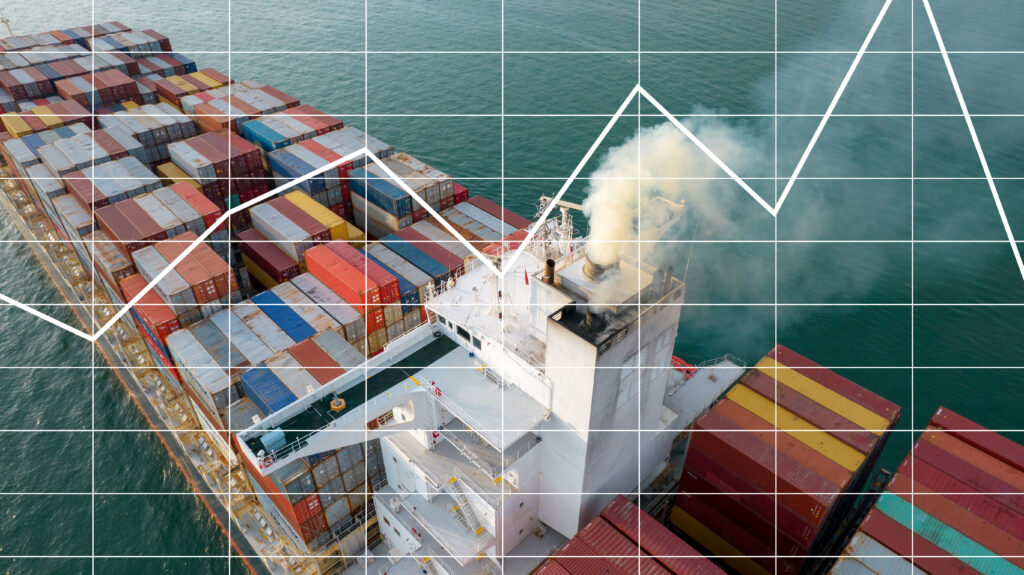
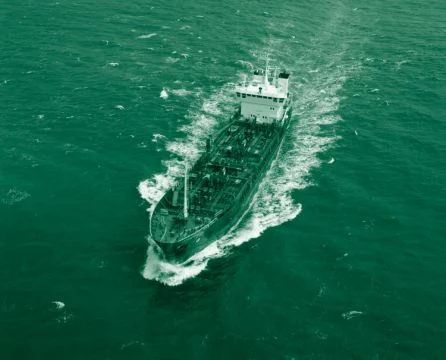
Commercial vessel with graph on top

An obvious starting point would be that legislators in the EU, US and China demand that all ships must document their emissions of CO2, soot particles or other harmful gases and particles. This would have an effect in the short run, because very few can say with certainty what exactly is coming out of the stack of a container ship, for example. Once authorities have determined that emissions exceed the limit values – and emissions often do – the shipping companies must take corrective action, and this will result in greener shipping. Granted, shipping companies do use calculations, but they are at best highly imprecise and in many cases downright misleading.

However, customized measuring equipment can put these doubts to rest, as such equipment accurately measures how many emissions the ships emit. The technology is already available, and the cost for the shipping companies to install the measuring equipment is minimal – in fact, less than a day’s worth of fuel consumption. Let us start measuring right now so we can document all the green initiatives we are already taking – not just the largest ones that require huge investments.

Most people agree that fossil fuels need to be phased out. But it is important to remember that when that happens, ships will instead be running on a combination of different fuels, making calculations even more difficult to carry out. In addition, several of the new fuels rely on pilot fuels in the ignition phase, which makes calculations even more imprecise, and biofuels always vary in composition and therefore cannot be calculated. This just emphasizes how calculations are inadequate, while measuring equipment provides accurate, reliable data.

It is a great thing that shipping companies are leading the way by investing in ships that can run on methanol. But in general, shipping companies around the world are far too slow to implement the fuels of the future, and if you look at the shipping industry’s total emissions, it does not make that much difference that relatively few ships run on methanol, ammonia or LNG.

The UN’s maritime organization, IMO, has tightened the requirements for shipping in order to reduce CO2 emissions.  However, neither the UN, EU, China nor the US require shipping companies to provide valid data. Frankly, this seems rather unambitious, and politicians should step up – for the sake of our planet.
"Let us start measuring right now so we can document all the green initiatives we are already taking – not just the largest ones that require huge investments."
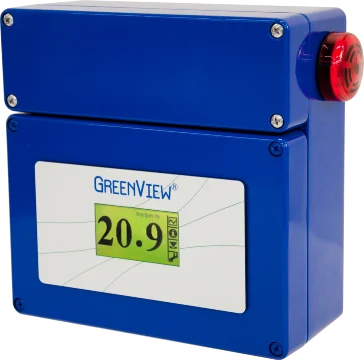
G3631 Ambient Oxygen Analyzer by Green Instruments measures the content of oxygen
Product

G3631 Ambient Oxygen Analyzer

The G3631 Ambient Oxygen Analyzer measures the content of oxygen in the atmosphere in e.g. engine rooms or other places there is a need for monitoring the oxygen level. By measuring the content of oxygen, the analyzer helps minimize several risk factors.

Read more
Commercial vessel in green ocean
Product

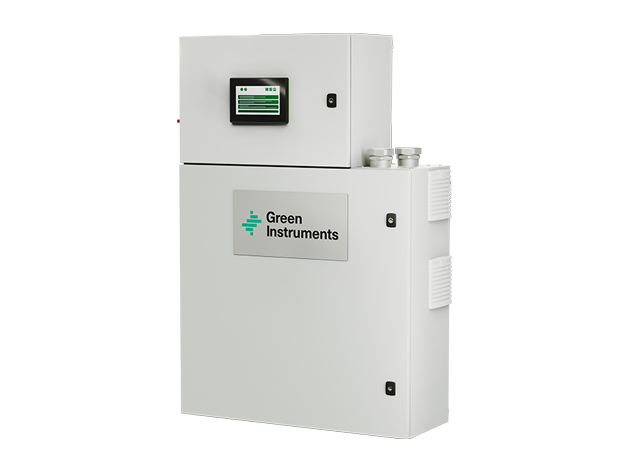
Black Carbon Monitoring System

The G8100 is purpose-built for the demanding conditions of maritime operations. The system ensures reliable performance at sea while supporting compliance, efficiency, and environmental stewardship.

Read more
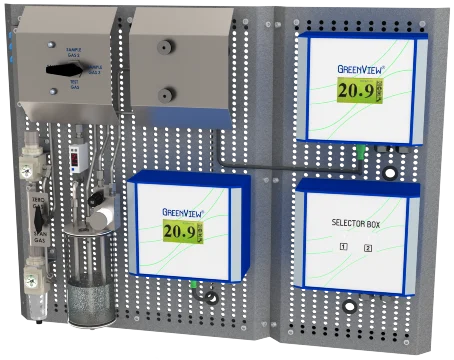
G3621 Stack Gas Oxygen Analyzing System by Green Instruments
Product

G3621 Stack Gas Oxygen Analyzing System

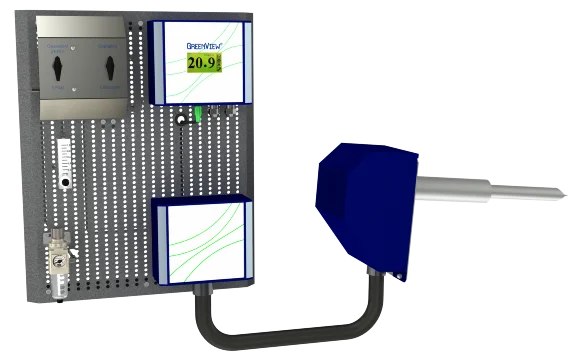
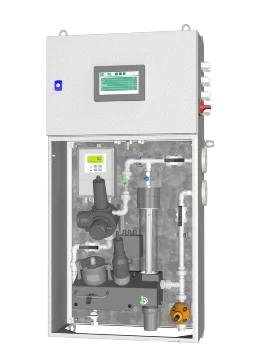
The G3621 Stack Gas Oxygen Analyzing System is developed for accurate oxygen measurements in several marine applications. It is installed directly in the stack and operates under actual exhaust gas conditions, which provides reliable and real-time data.

Read more
G3621 Inert Gas Oxygen Analyzing System by Green Instruments
Product

G360x Inert Gas Oxygen Analyzing System

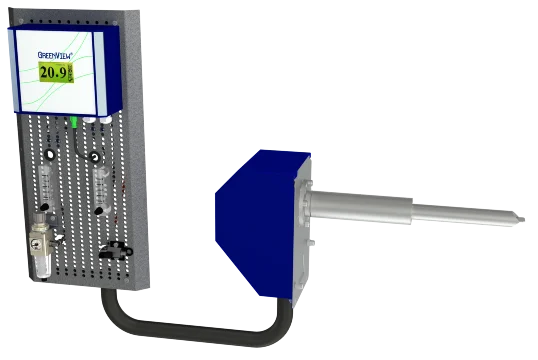
The G360x Inert Gas Monitoring System is designed for accurate gas monitoring and control. With its simple and robust design, it measures the content of oxygen in inert gas, thus preventing combustible atmospheres.

Read more
G26 Ambient Oil Mist Detector is a safety monitoring system by Green Instruments
Product

G26 Ambient Oil Mist Detector (Ex)

The G26 Ambient Oil Mist Detector is available as an ATEX/IECEx certified version. G26 Ex is designed to respond to any minor or major oil mist formation, which helps prevent subsequent hazards such as fires and explosions.

Read more
G26 Ambient Oil Mist Detector is a safety monitoring system by Green Instruments
Product

G26 Ambient Oil Mist Detector

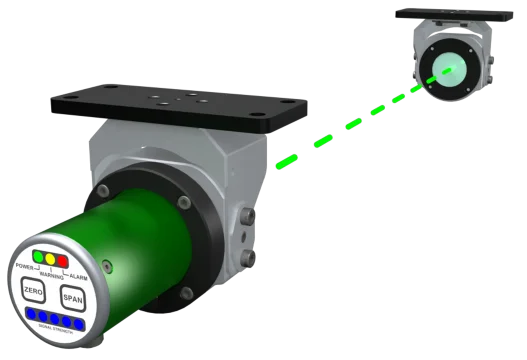
The G26 Ambient Oil Mist Detector is a reliable opacity meter designed to detect all types of oil mist in both open and narrow spaces. With its high accuracy and green laser technology, the oil mist detector helps avoid fires and thereby protects lives, the environment, and assets.

Read more
G6200 Water Monitoring System_WMS by Green Instruments
Product

G6200 Water Monitoring System

The G6200 Water Monitoring System is designed for continuous in-situ water monitoring and provides reliable and highly accurate measurements for exhaust gas cleaning. It has a robust design, is simple to install, and covers a broad temperature range, pressure, and flow.

Read more
GreenView Emissions Insight is a live emissions measurement system by Green Instruments
Product

GreenView Emissions Insight

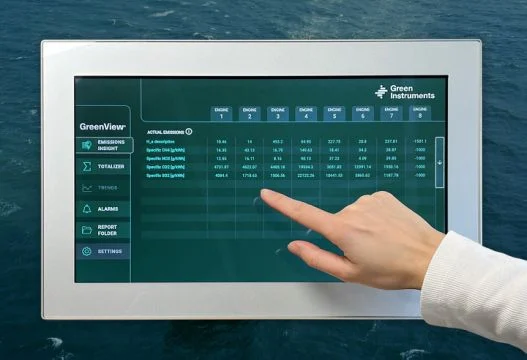
GreenView combines relevant onboard input with live emissions measurement, utilizing the carbon-balance method to provide direct access to real emissions insight – unlocking both economic benefits and a stronger commitment to climate protection.

Read more
G4130 NOx/O2 Analyzing System by Green Instruments
Product

G4130 NOx/O2 Analyzing System

The G16 Smoke Density Monitor is an advanced smoke and dust monitoring system designed to provide precise combustion data for legal and financial requirements. The compact design and use of green laser technology makes it trustworthy and useful in stacks on board vessels.

Read more
Product

G7200 Multi Gas Monitoring System

The G4130 NOx/O2 Analyzing System provides real-time measurements of NOx and O2 concentrations in exhaust gases. It is simple to install, ensures environmental compliance, and provides precise data for economical reporting requirements.

Read more
G16 Smoke Density Monitor emission monitoring device by Green Instruments
Product

G16 Smoke Density Monitor

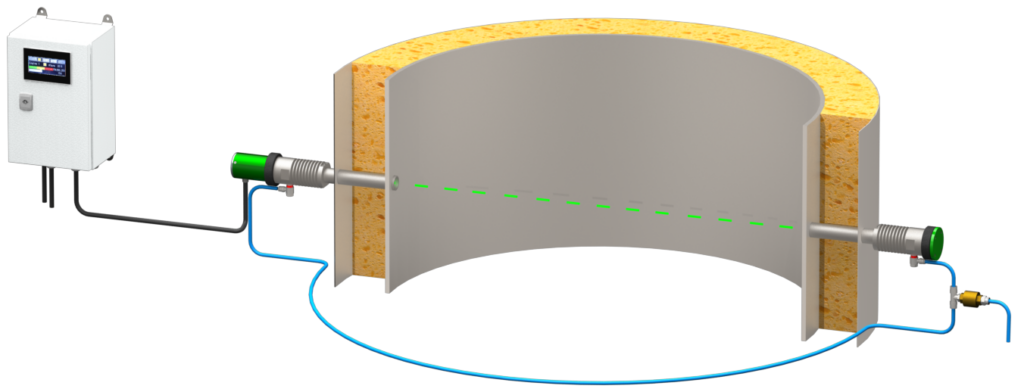
The G16 Smoke Density Monitor is an advanced smoke and dust monitoring system designed to provide precise combustion data for legal and financial requirements. The compact design and use of green laser technology makes it trustworthy and useful in stacks on board vessels.

Read more